 Ravi Singh
A 44-year-old man with hypertension and type 2 diabetes and a heavy family history: father and sister both died young of a heart attack. Record the ECG, troubleshoot issues during recording and reason clinically.
Ravi Singh
A 44-year-old man with hypertension and type 2 diabetes and a heavy family history: father and sister both died young of a heart attack. Record the ECG, troubleshoot issues during recording and reason clinically.
all modules
module: cardiology
ECG interpretation
Train the full process of electrocardiography, from the physical procedure to the clinical conclusion. Place the electrodes correctly on a virtual patient and analyse the ECG systematically. One scenario in ~15 minutes.
6
scenarios
~15 min
per scenario
1 process
from procedure to conclusion
what you train
From the physical procedure to the clinical conclusion.
The full ECG process: placing correctly, analysing systematically and translating your finding into a decision. Not just what you see, but what you do with it.
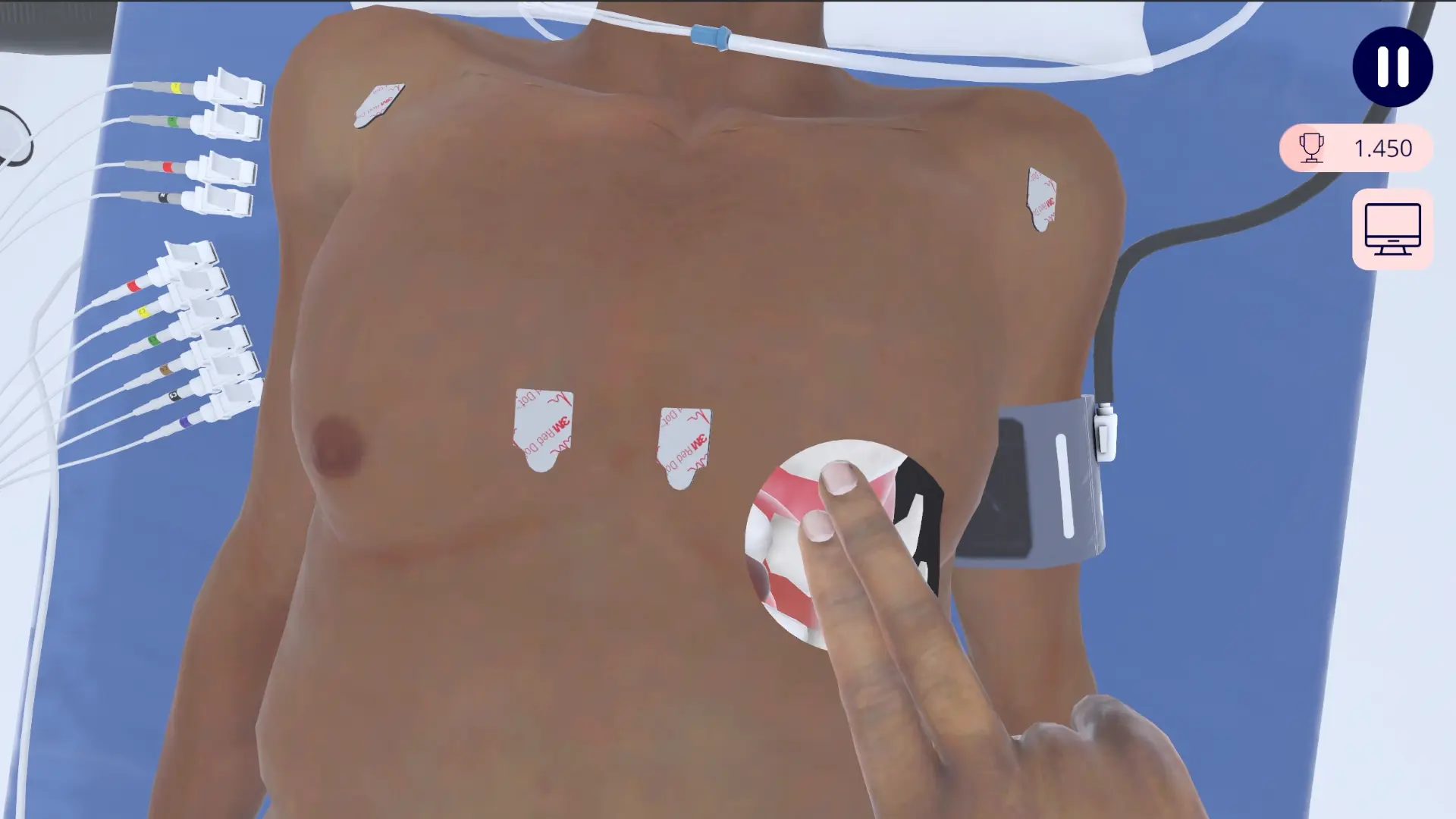
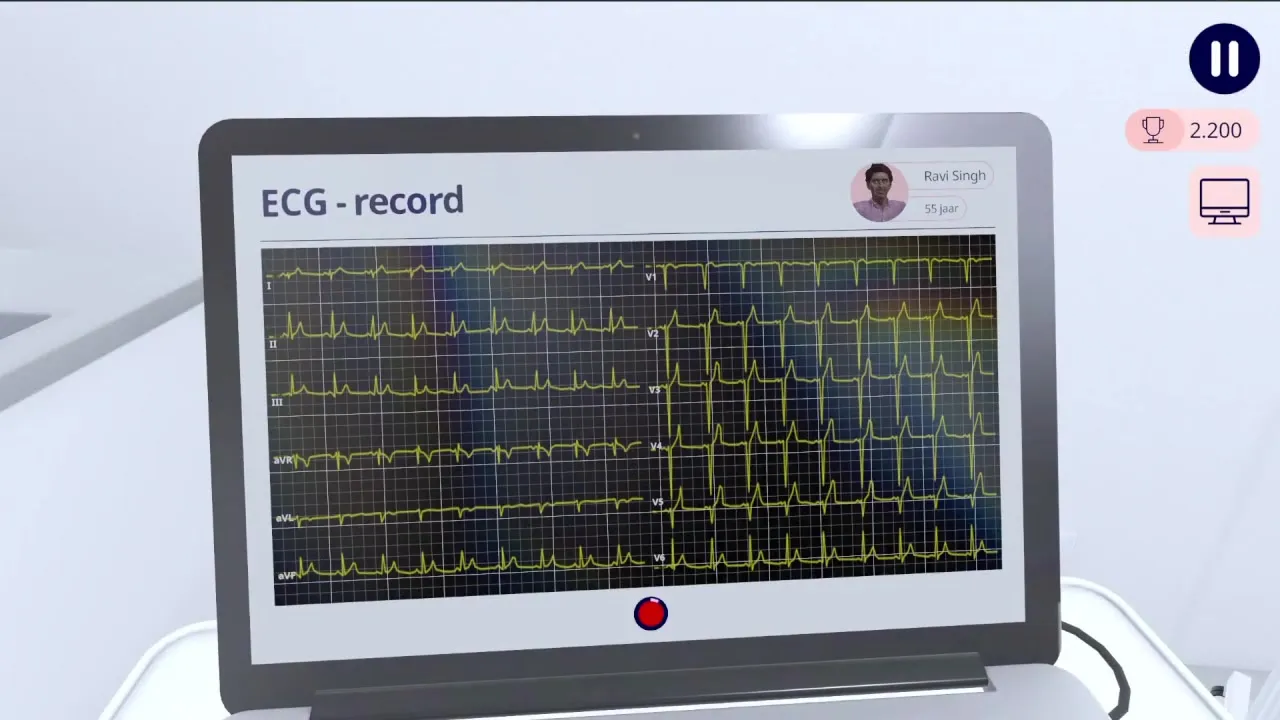
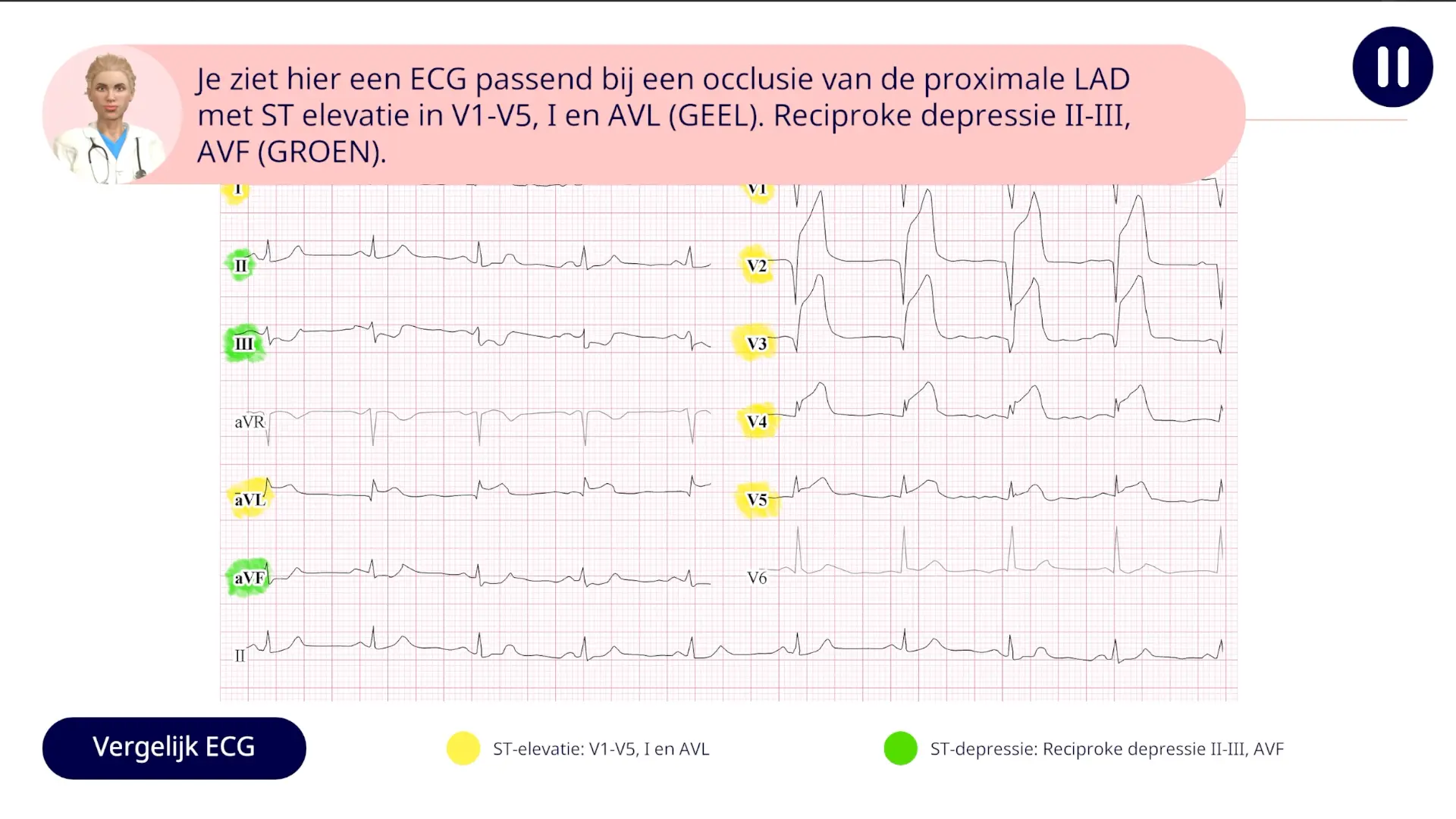
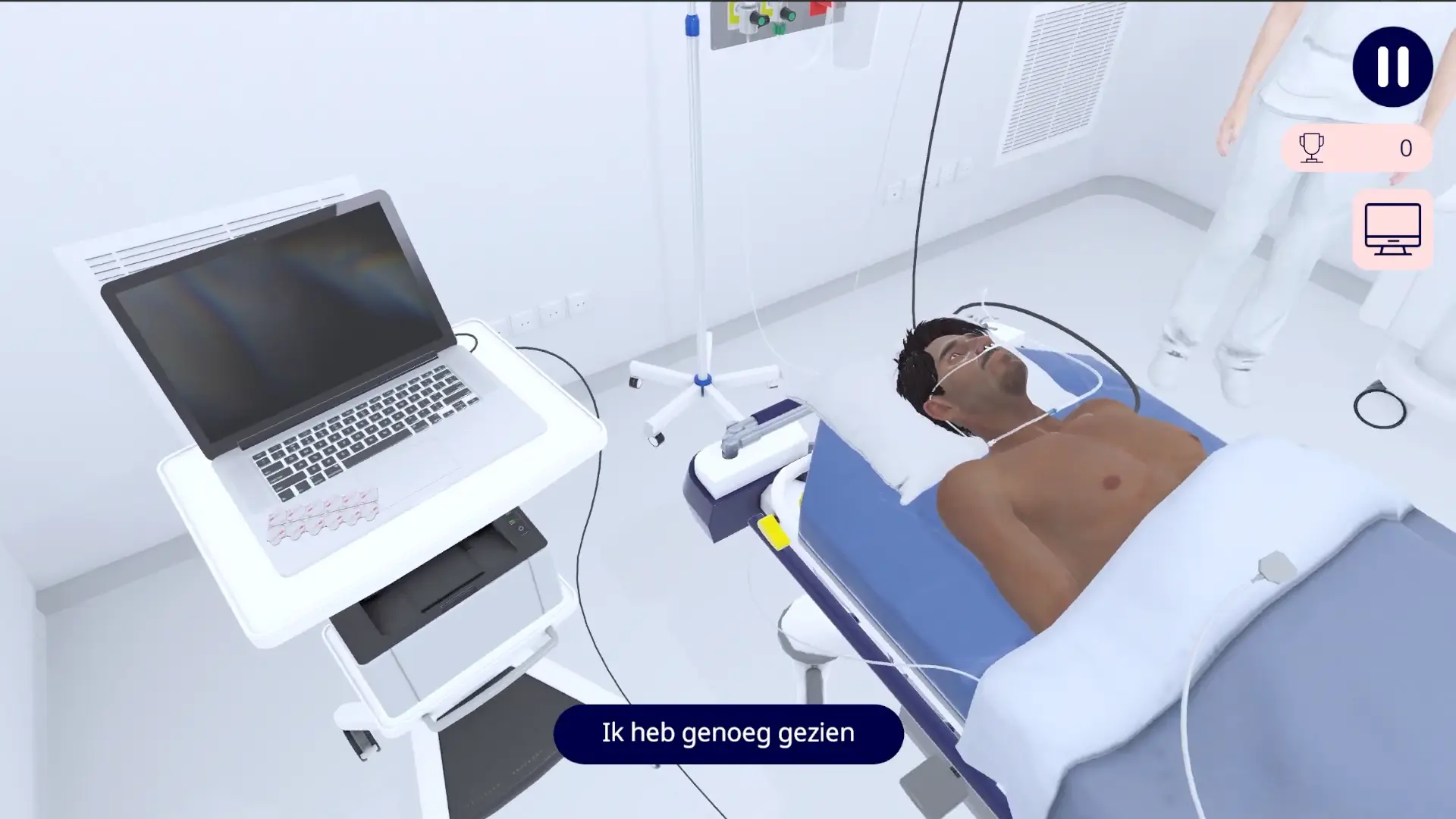
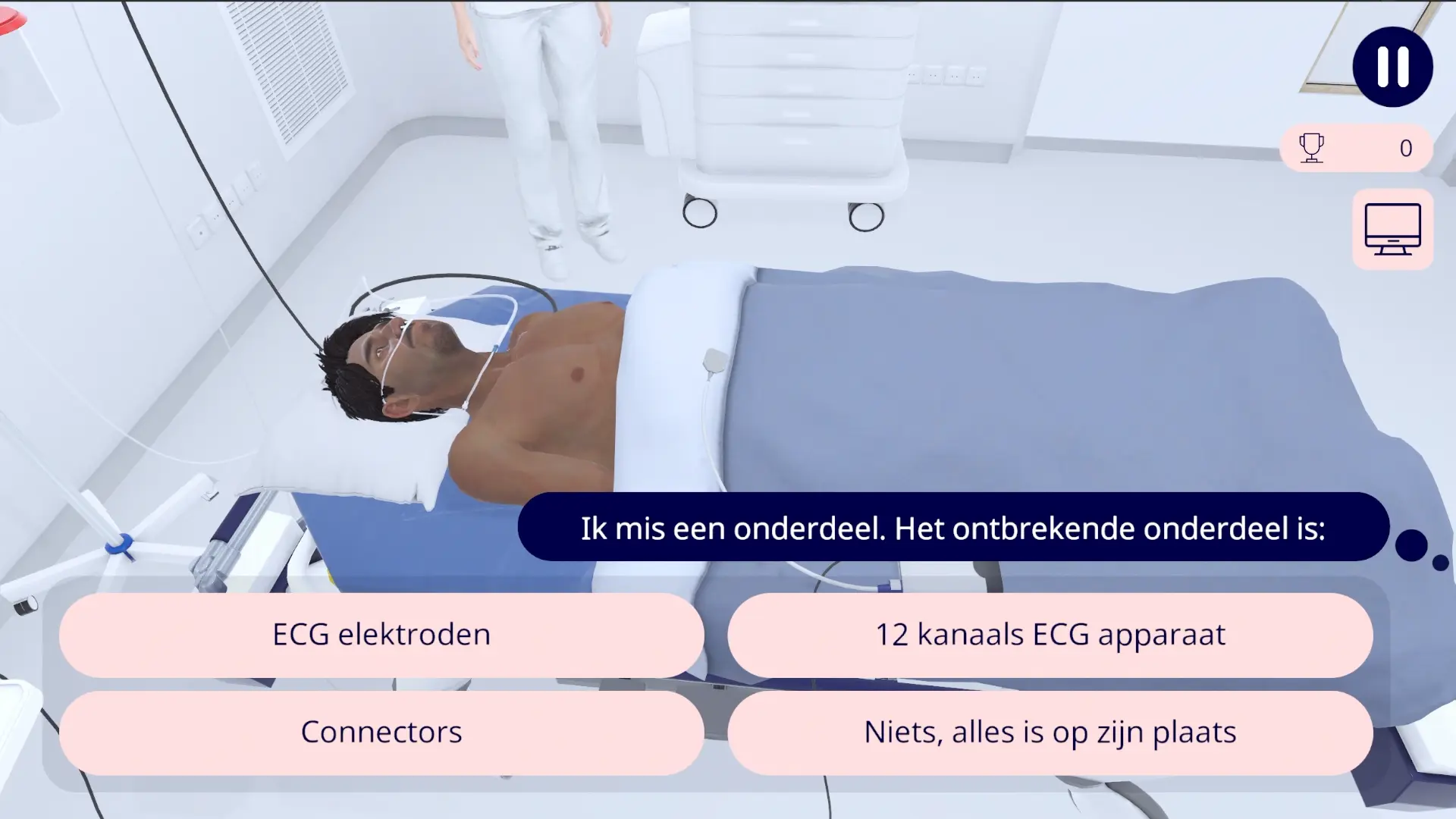
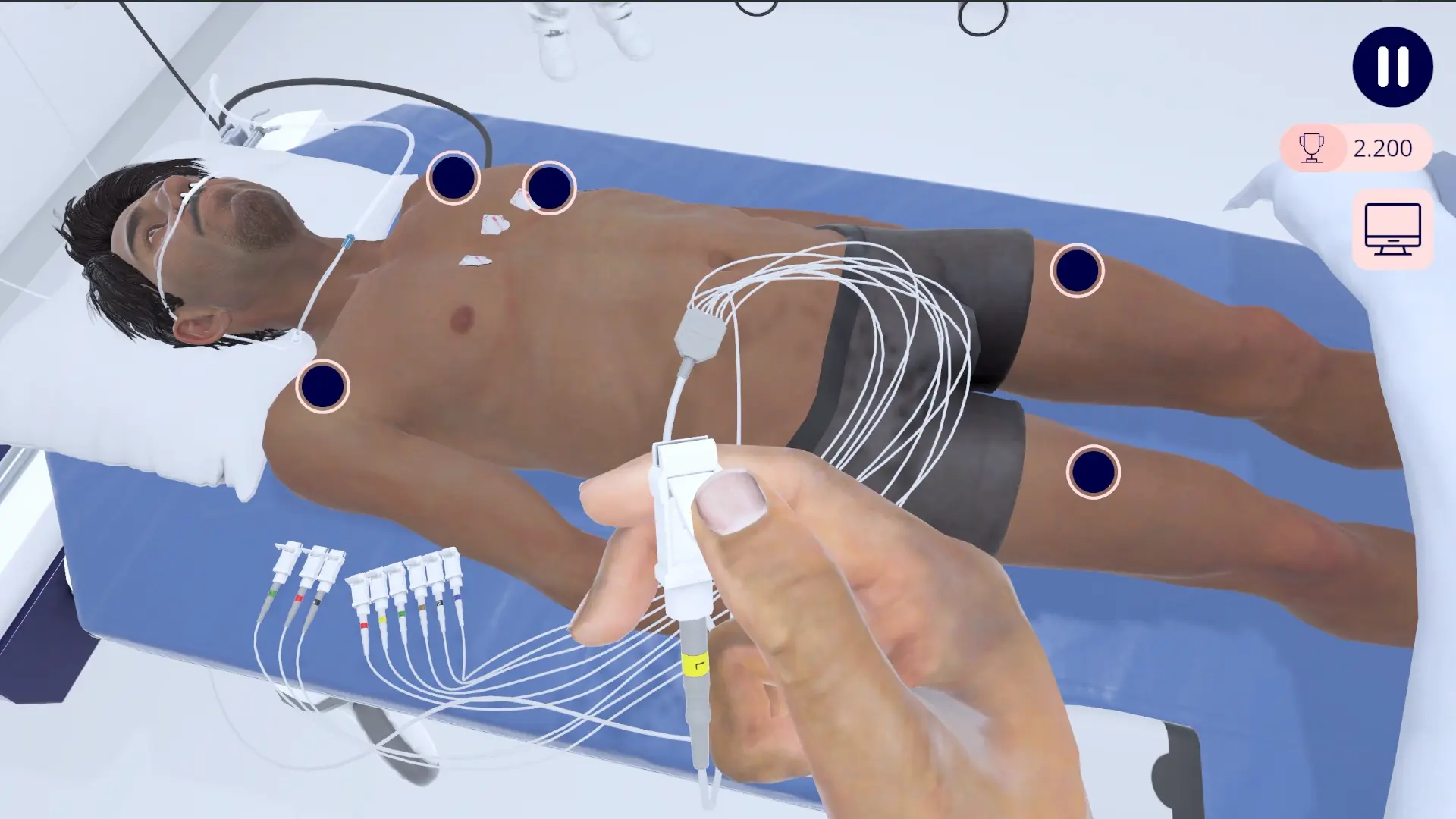
in the game
images from the game
This is what the ECG module looks like.
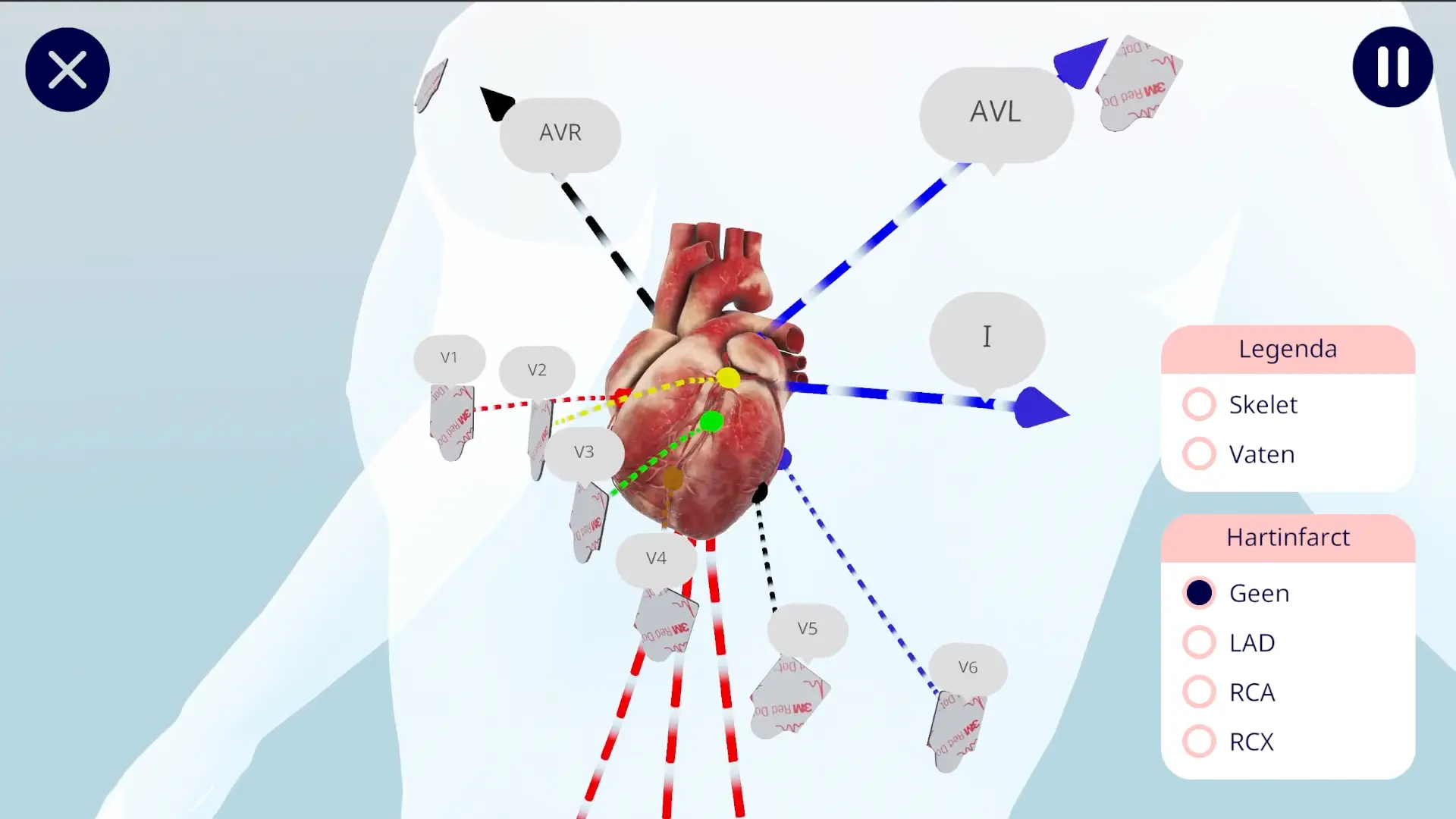
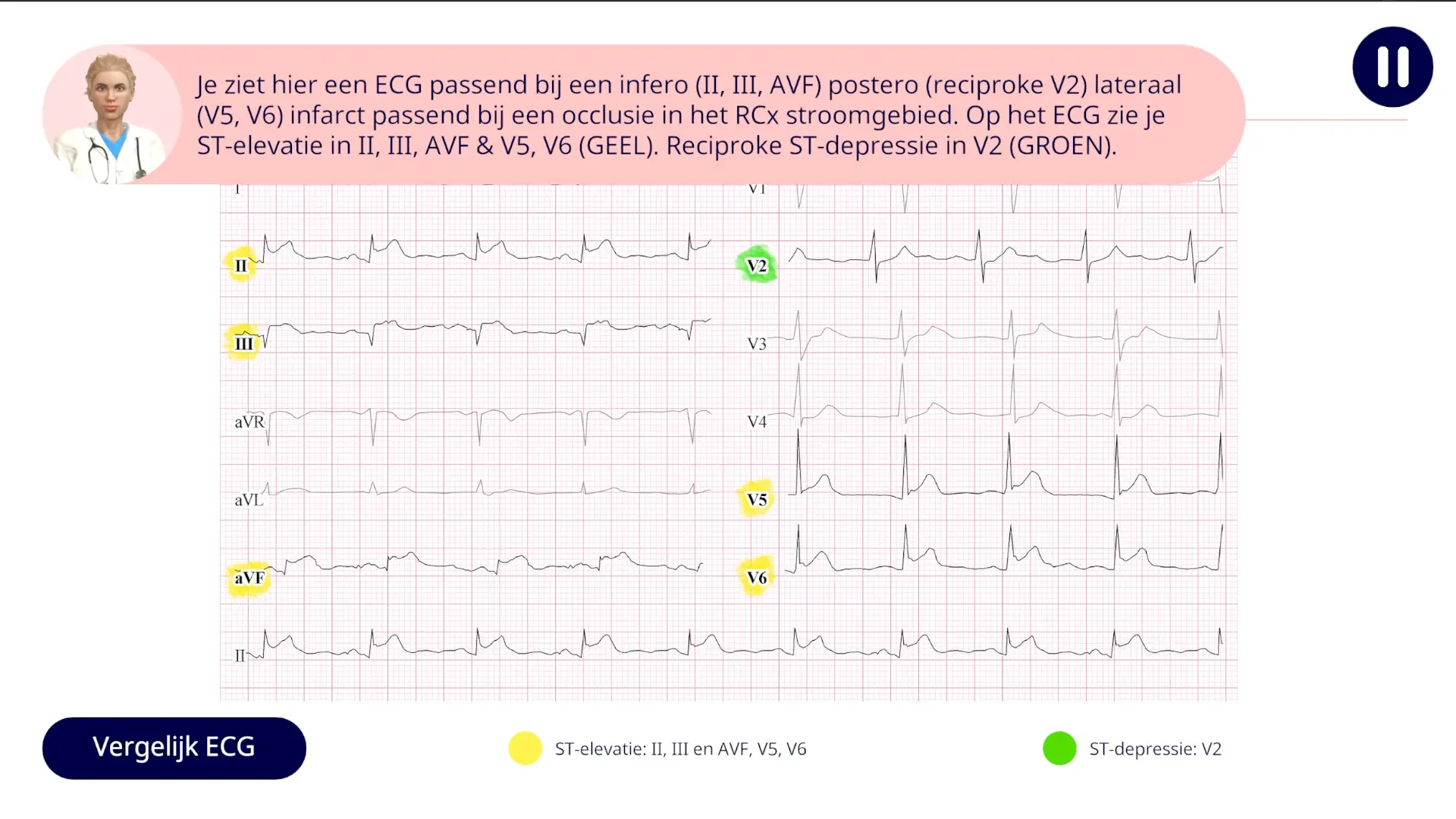
the patients
Three virtual patients, each with their own story.
Ravi Singh
A 44-year-old man with hypertension and type 2 diabetes and a heavy family history: father and sister both died young of a heart attack. Record the ECG, troubleshoot issues during recording and reason clinically.
 Annet de Leeuw
A 48-year-old woman presents at the cardiac emergency unit: since last night tired, muscle pain in back, shoulders and neck, and some chest pressure. Strong family history, her brother and both parents had a heart attack.
Annet de Leeuw
A 48-year-old woman presents at the cardiac emergency unit: since last night tired, muscle pain in back, shoulders and neck, and some chest pressure. Strong family history, her brother and both parents had a heart attack.
 Nouria Al'Asad
Admitted to internal medicine after diarrhoea on holiday. During admission an ECG is needed. Place the electrodes correctly and assess the ECG systematically.
Nouria Al'Asad
Admitted to internal medicine after diarrhoea on holiday. During admission an ECG is needed. Place the electrodes correctly and assess the ECG systematically.
Together with Ravi Singh's 3 routes and an interactive ECG animation explaining the 7+2 step plan, you reach 6 scenarios.
learning objectives
What you'll master after this module.
1Placing the 10 electrodes (limb & precordial leads) in the anatomically correct positions, to avoid measurement errors.
2Systematic ECG analysis using the 7+2 method: rhythm, heart rate and conduction intervals (PQ, QRS, QT).
3Clinical interpretation, translating findings into a diagnosis and an appropriate proposal for treatment or urgent referral.
testimonials
What Amsterdam UMC says about the ECG game.
“With this game, students step enthusiastically into the role of physician: they record an ECG on a virtual patient, assess it step by step and train clinical reasoning through play. A game after our own heart!”
“As a lecturer I see how this interactive game enables students to practise ECG interpretation independently and without limits, in a safe and motivating learning environment.”
why it works
Feedback on every choice, and a score that shows where you stand.
Interactive
Instant feedback on your choices, with a score that shows where you stand.
Virtual
Practise in a safe, simulated environment, as often as needed.
Always available
On computer, phone or tablet, wherever and whenever it suits.
who it's for
For healthcare professionals who interpret ECGs.
01
Physicians & cardiology residents
Build routine in the full ECG process, from placement to diagnosis and next step.
02
CCU/ICU/ED nurses
Keep rhythm recognition sharp and link findings quickly to the right next step.
03
Healthcare professionals & institutions
Other healthcare professionals and institutions that want to keep ECG competence demonstrably up to standard.
See the ECG module live?
In a short demo we'll let you play a real ECG case, and help you plan how to use it with your audience.