Medu.game
virtual simulations for educators and L&D in healthcare

The learning platform that closes the gap between theory and practice.

Healthcare professionals practise clinical scenarios in realistic 3D, as often as needed, in the browser or as an app.

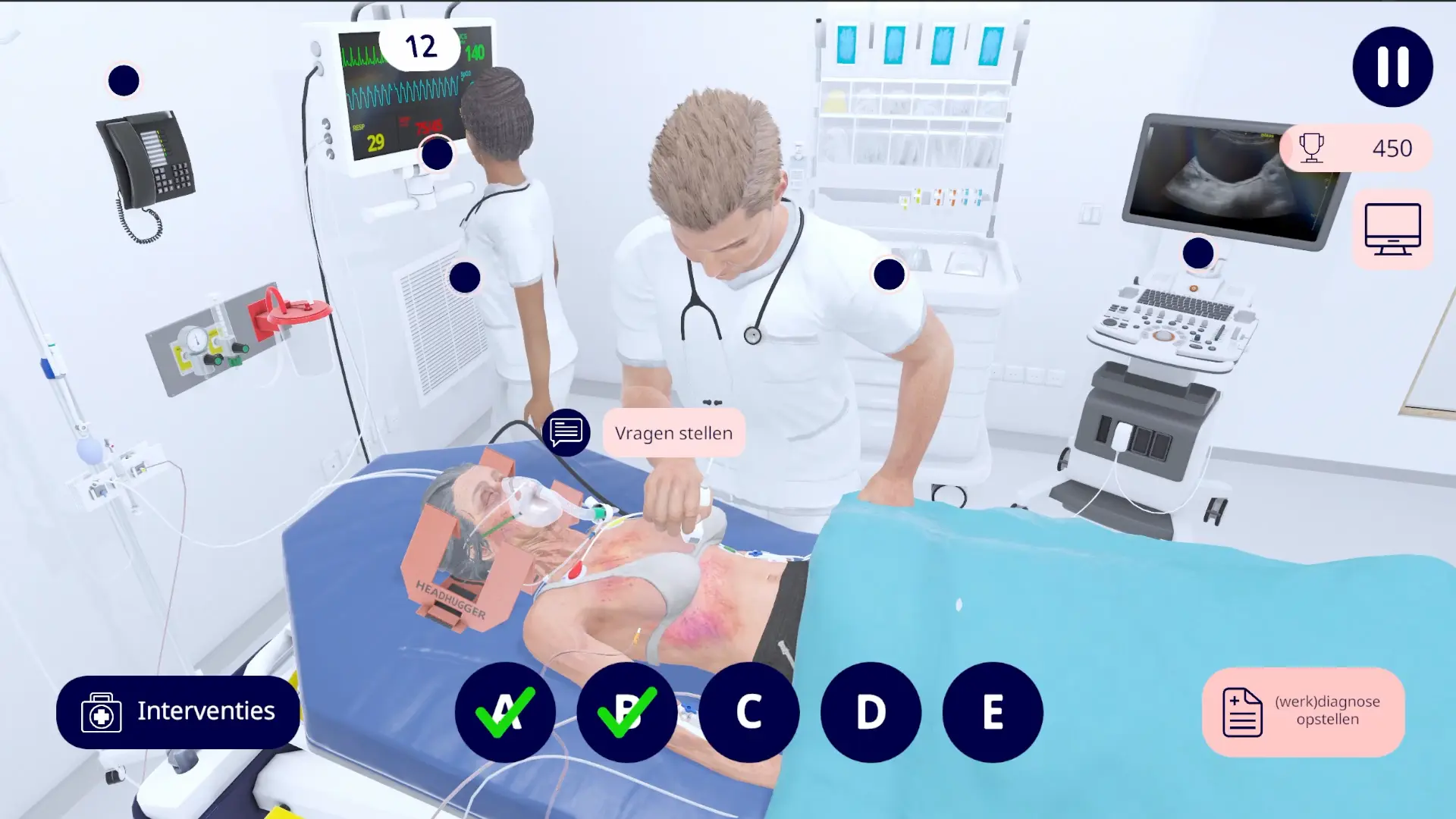
gameplay: ABCDE
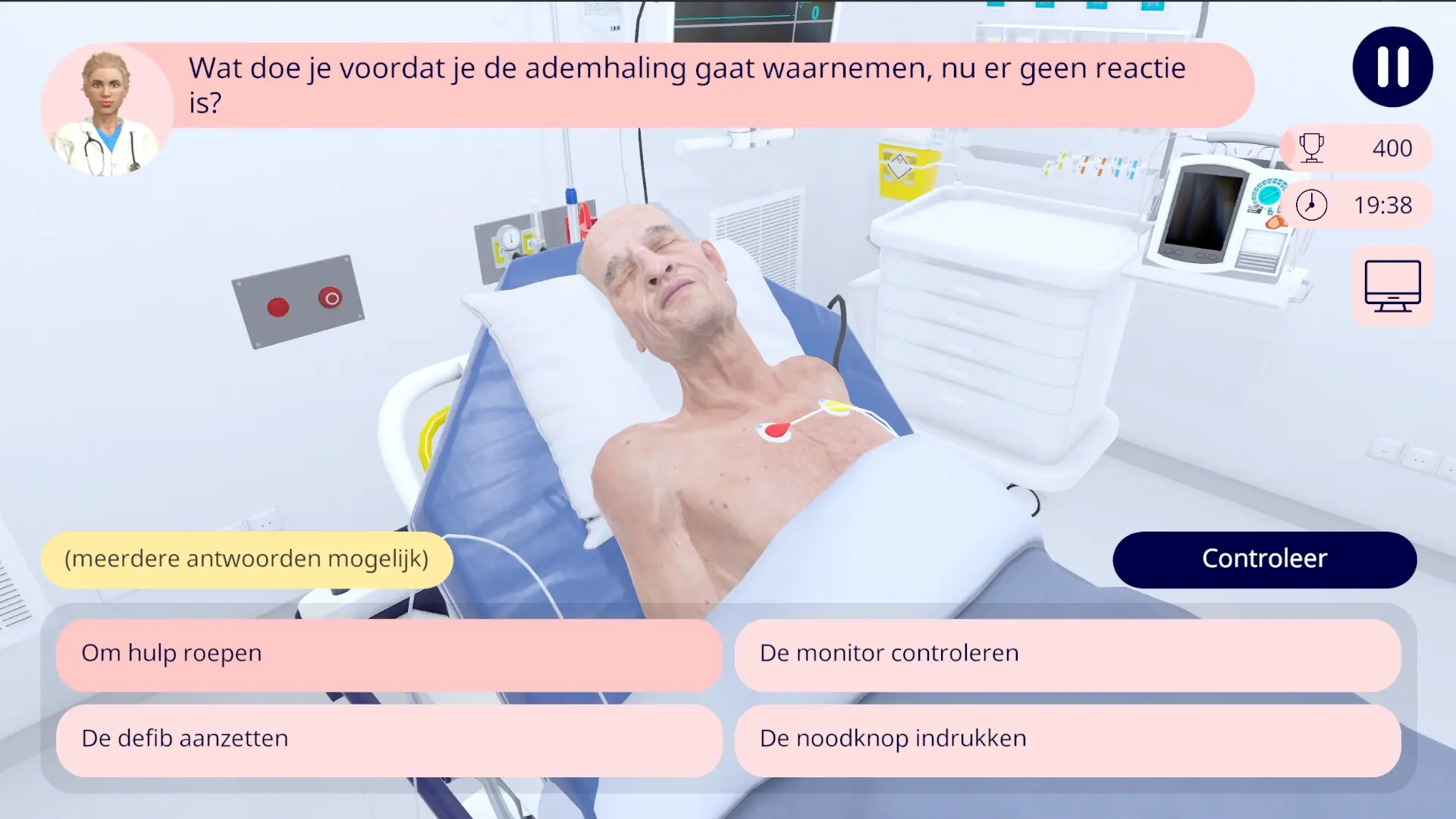
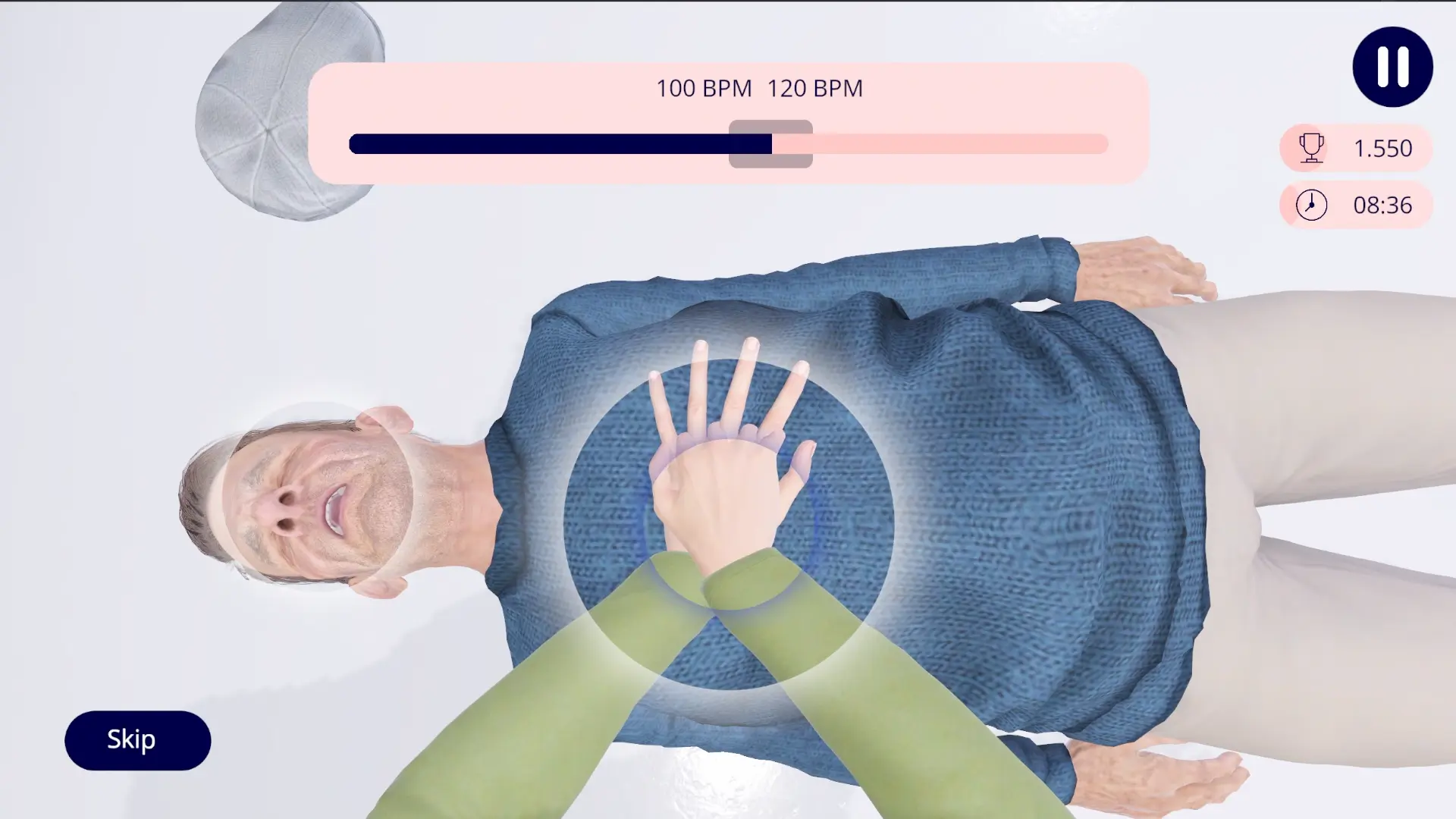
gameplay: Resuscitation & AED
gameplay: ECG
gameplay: ALS
worked with
  • NVIC
  • NVA
  • UMCG
  • MUMC+
  • Amsterdam UMC
  • Gelre ziekenhuizen
  • Tergooi MC

Game-based learning, built for healthcare.

Game-based learning puts the mechanics of games to work to practise knowledge, competencies and skills. Not because it has to be fun, but because you remember what you do.

  1. 1You play a realistic case with characters and a storyline: no classroom, real context.
  2. 2You make decisions, complete tasks and immediately apply what you learn in a safe simulation.
  3. 3After every step you get direct feedback on your actions, so knowledge sticks in practice.
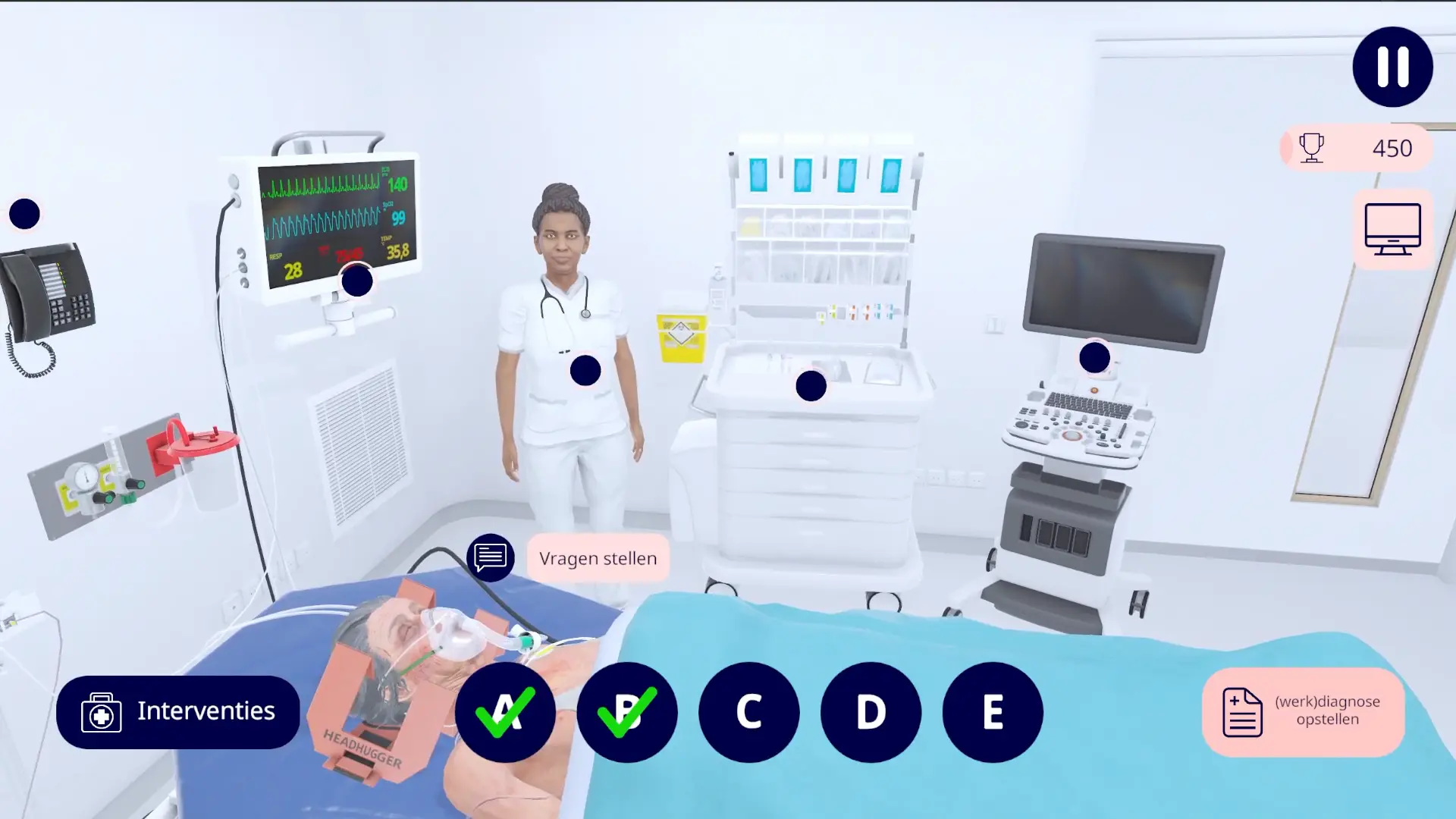
And this is what it looks like in the game view the ABCDE module
ABCDE module: wide view of the emergency department, patient on a monitored bed
The emergency department, with the ABCDE bar and interventions
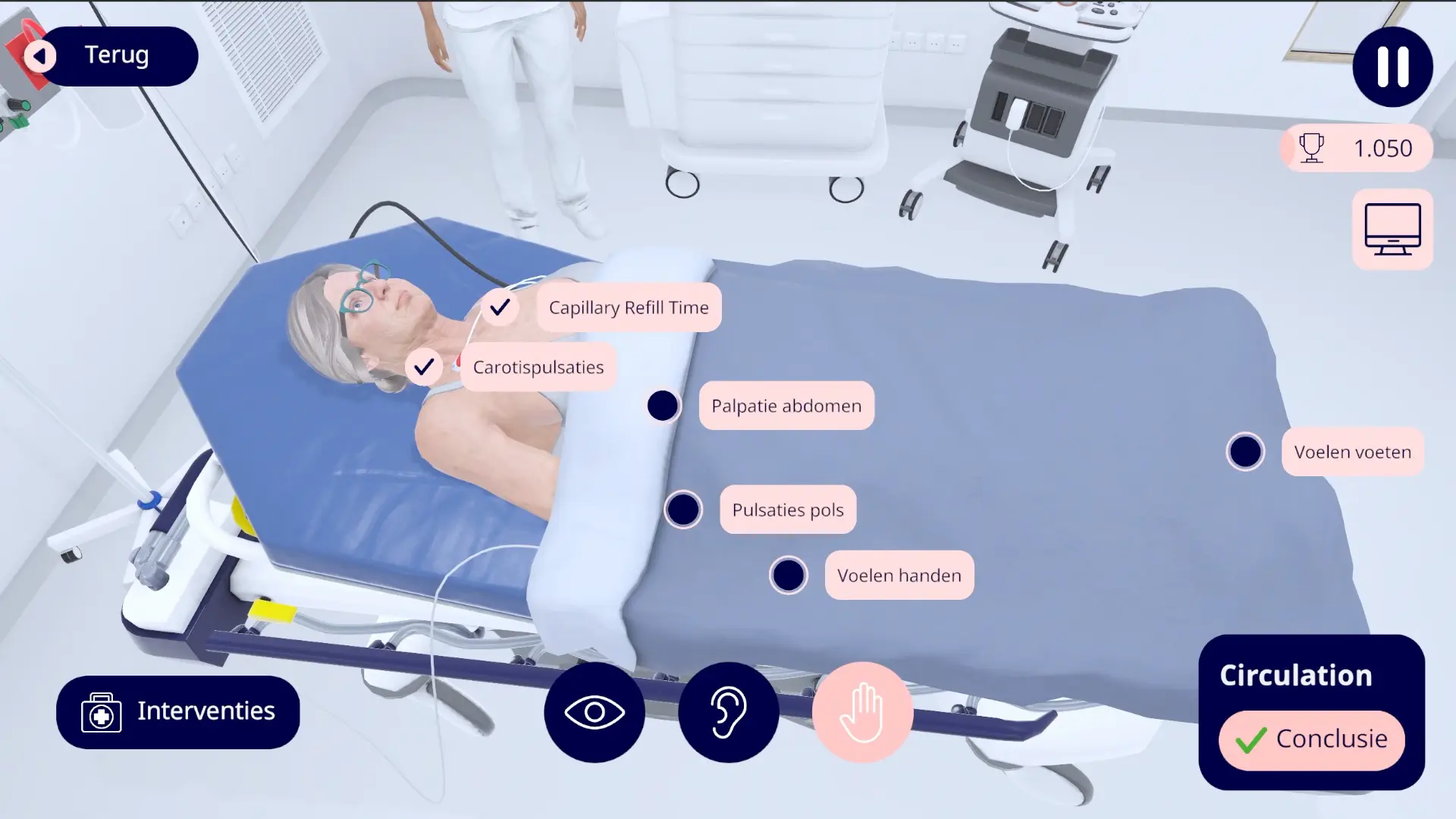
ABCDE module: systematic assessment of the circulation
Systematic assessment, step by step
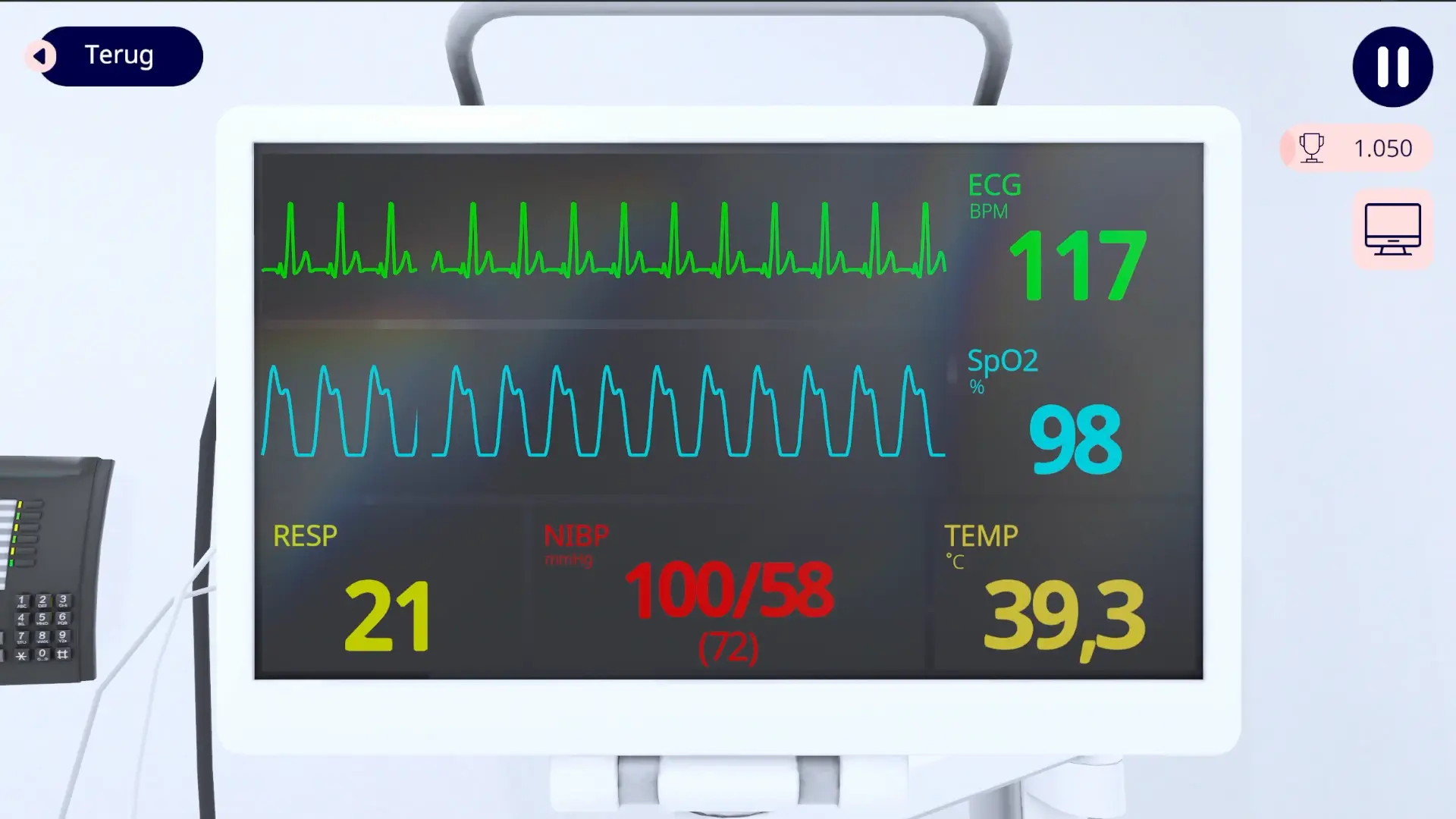
ABCDE module: vital signs on the monitor
Vital signs on the monitor

The bridge between theory and practice.

From hands-on experience and from research, we know where our modules work best: between theory and practice. Theory is cheap, but passive; hands-on practice hours are essential, but scarce and costly. Those who first play the online simulation safely arrive more competent in practice. That way you make better use of those scarce practice hours, and the theory sticks better.

  1. Theory

    Book or e-learning, the knowledge base. Cheap and scalable, but passive and quickly forgotten.

  2. medu.game

    Virtual simulation

    Apply the theory safely in realistic scenarios. Anywhere, as often as needed, at no extra cost per run, and you experience what will be expected of you in practice.

  3. The hands-on day

    Essential, but scarce and costly. Healthcare professionals arrive prepared: more time for depth, less for the basics.

Learning by doing sticks.

Books and e-learning lay an essential foundation, but it stays dry material. What you actively do sticks better: game-based learning boosts engagement, retention and real-world transfer. That is where mandatory training tends to stall.

More engagement

Interactive cases grab attention and hold it. People come back to practise on their own, and that repetition is what builds competence.

Better knowledge retention

In the simulation you apply knowledge straight away, turning theory into skill that sticks.

Immediately relevant

Every case is built together with subject-matter experts and validated against the guidelines. What you practise here, you do on the job tomorrow.

the modules

Clinical content, ready to play.

This is the real content. Each module is a set of realistic scenarios with their own learning objectives, instant feedback and a score. Choose a module for its scenarios and details.

Resuscitation & AED

Practise the protocols around basic life support and AED use in realistic scenarios, from a man collapsing in an office lobby to resuscitating a child. Safe, engaging and with instant feedback.

responsivenessairwaybreathingcompressionsrate & depthaed
  • 3 scenarios
  • ±1 hour of content
  • adults & children
  • for first responders, first aiders & qualified professionals
view the scenarios

ABCDE

Assess acutely ill patients systematically using the ABCDE structure, recognise life-threatening situations, prioritise interventions in a busy emergency setting and collaborate under time pressure. Instant feedback on every decision.

airwaybreathingcirculationdisabilityexposure
  • 4 scenarios + 1 tutorial
  • debriefing per scenario
view the scenarios

ECG

From the physical procedure to the clinical conclusion: place the 10 electrodes correctly and read the 12-lead ECG systematically using the 7+2 method, from rhythm and conduction times to diagnosis and next steps.

10 electrodes7+2 methodrhythm & conductiondiagnosis
  • 6 scenarios
  • ~15 min each
  • from procedure to conclusion
view the scenarios

ALS

One full code blue scenario (~20 min): the ALS algorithm with rhythm analysis and timely medication, the 4 H's & 4 T's, plus leading the resuscitation team with closed-loop communication.

ALS algorithmrhythm analysis4 H's & 4 T'sdefibrillationclosed-loop communication
  • 1 scenario
  • ~20 min
  • advanced level
view the scenarios
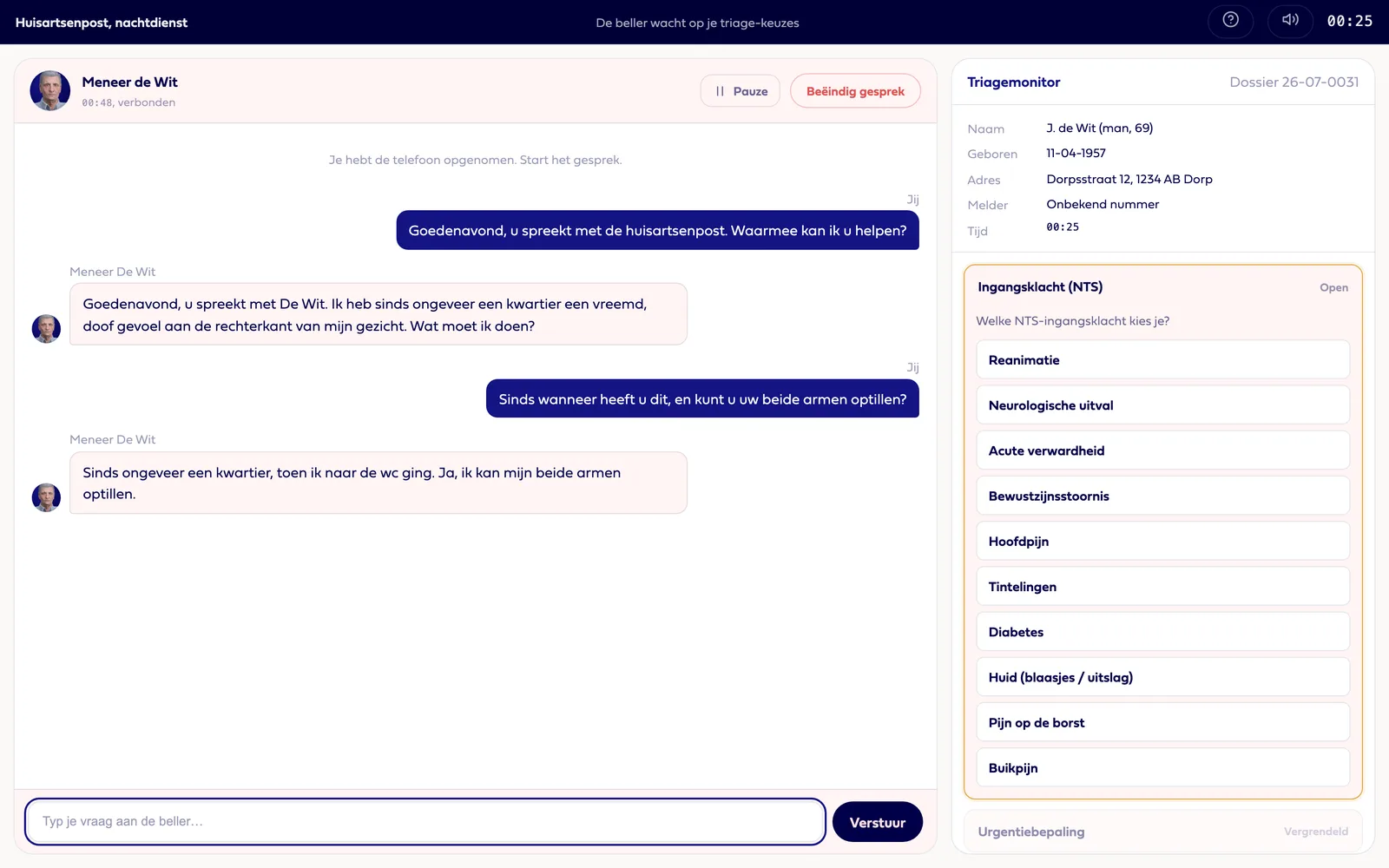
Triage Cockpit: a phone call with a caller next to the triage monitor with NTS presenting complaints

Triage Cockpit

Practise telephone triage at the out-of-hours GP service. You ask the caller the questions yourself and decide on the urgency, just like on a night shift. The caller responds realistically, whether you speak or type.

presenting complaint (NTS)urgencyfollow-up actioncoordinating GPrecord keeping
  • triage staff and doctor's assistants
  • ~15 min per case
  • in the browser, nothing to install
  • in Dutch, based on the Dutch NTS
coming soon

Runs wherever you learn.

In the browser on a computer or laptop, and as an app on phone and tablet: the same clinical scenarios on every device, with progress that travels with you. Play it directly, or embed it in your own learning environment via an LTI integration.

ABCDE module in the browser: the full emergency department on a large screen ALS module on a tablet: a question with answer buttons resuscitation module on a phone in landscape: chest compressions with large controls
progress synced

Take a look at our learning environment.

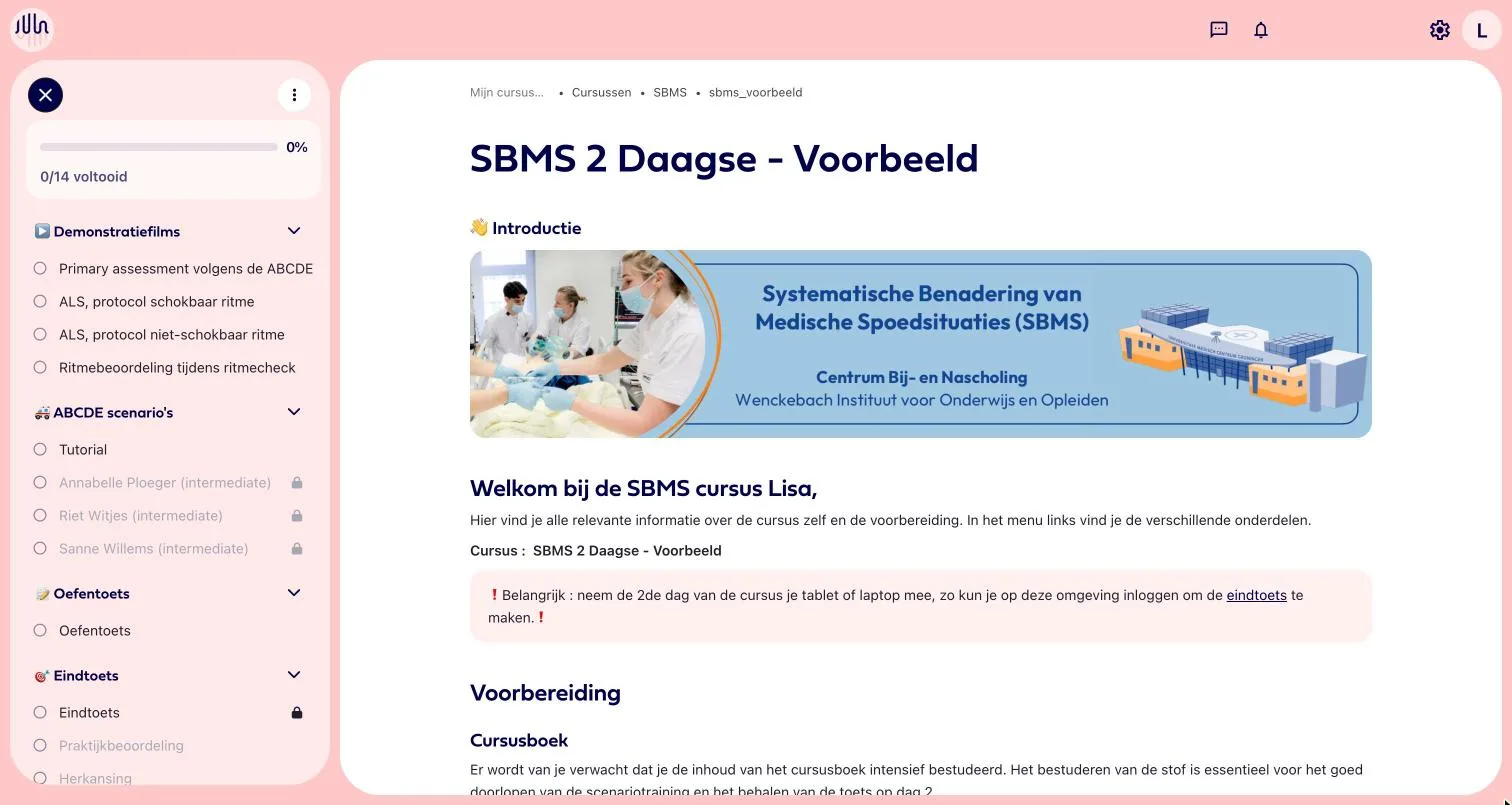
No LMS of your own? Learners then play the modules in our learning environment, with the theory, tests and certificate in the same course. Account management, SSO, guest access and progress tracking are included.

see it for yourself
A course in the Medu.game learning environment: sections and progress on the left, the course page on the right

One stable platform. We build it, you use it.

Build content quickly yourself on a proven platform with ready-made building blocks, or let us create the scenarios and simulations, together with your experts.

Immersive 3D

Realistic 3D environments and animations make the material memorable: a virtual hospital to practise in safely.

Multilingual & proven

Active in several countries, available in Dutch, English and Brazilian Portuguese, and new languages are easy to add.

connects via LTI 1.3 with MoodleCanvasaNewSpringother LMSs that support LTI 1.3
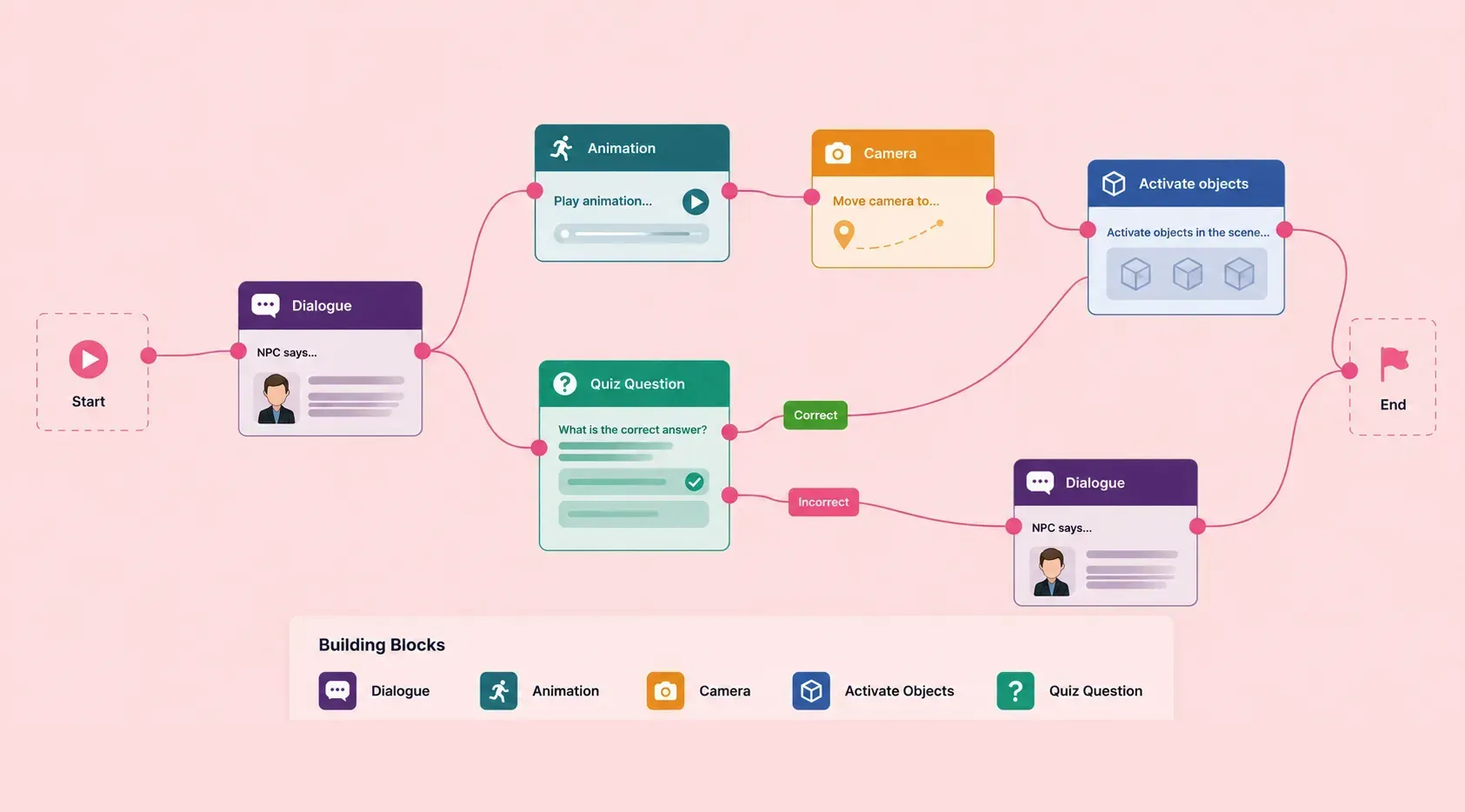
the visual Medu.game content builder
The visual content builder Scenarios, dialogues and decision points assembled from reusable building blocks, together with your subject-matter experts, validated against current guidelines.
testimonials

Recommended by physicians, educators and professional associations.

“With this game, students step enthusiastically into the role of physician: they record an ECG on a virtual patient, assess it step by step and train clinical reasoning through play. A game after our own heart!”
Dr. Navin R. BindrabanDr. Navin R. Bindrabancardiologist & education coordinator, Amsterdam UMC Heart Centre
“With simulations, you can practice situations in the ICU that are infrequent in daily practice.”
Dr. N.F. SchrotenDr. N.F. Schroteninternist-intensivist, Gelre Ziekenhuizen
“Serious games serve an educational purpose and use simulation and gamification to achieve it. You can safely practice different patient cases, you learn interactively and effectively, and you do not have to go to an on-site training.”
Tanja BeldmanTanja Beldmananaesthesiologist, Tergooi MC
“In training, tutoring and teaching specific skills, serious gaming can play an important role.”
Dr. Diederik GommersDr. Diederik GommersICU physician, Erasmus MC
“Serious games give us the opportunity for knowledge transfer to take place in a fun and interactive manner.”
Dr. U. StrauchDr. U. Strauchchair, NVIC
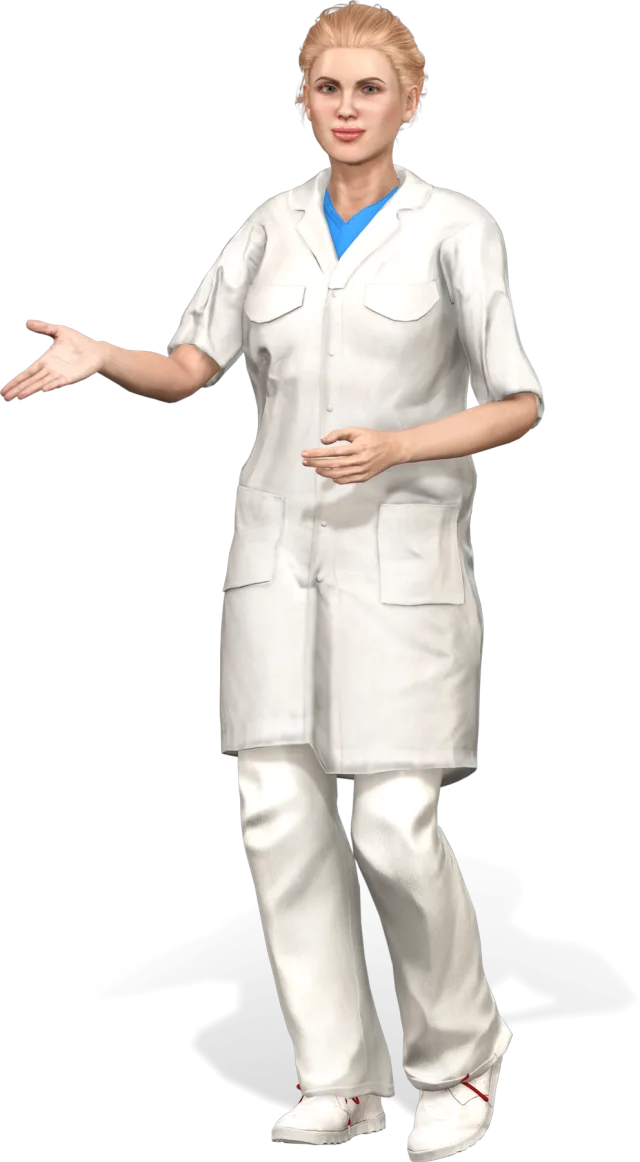
3D character: physician pointing at the testimonials
frequently asked questions

What educators usually want to know first.

Question not listed? In the demo we show a real case and answer everything for your situation.

book a demo (30 min)
Which devices does Medu.game run on?

You play Medu.game in the browser on a computer or laptop, where most people play, and as an app on phone and tablet. Your progress is saved everywhere, so you continue where you left off.

How is the content created?

Cases are assembled from reusable building blocks in the platform, together with subject-matter experts and validated against current guidelines. This makes new content quick to build while quality stays assured.

Does it integrate with our LMS?

Yes. There are ready-made integrations with Moodle, Canvas, aNewSpring and other well-known LMS platforms for progress reporting, plus single sign-on and user analytics.

Which languages is it available in?

Dutch, English and Brazilian Portuguese (pt-BR). Medu.game is used in several countries, and new languages are easy to add.

How do we measure results?

Through user analytics and LMS reporting you see participation, progress and performance, making training measurable for HR and the organisation.

How do you handle privacy and the GDPR?

We process personal data within the EEA wherever possible, in European Azure data centres (West Europe). We sign a data processing agreement with every client, and the few services that process outside the EEA are covered by appropriate safeguards. Full details are in our privacy policy.

What does Medu.game cost?

You pay per user per year. Depending on which modules you choose, the number of licences and whether you use our learning platform or your own LMS, we put together a custom price. Book a demo and we'll work it out for your situation.

Ready to see Medu.game in action?

The fastest way to understand the platform is a short demo. We'll show a real case and help you think through your training goals and learning paths.

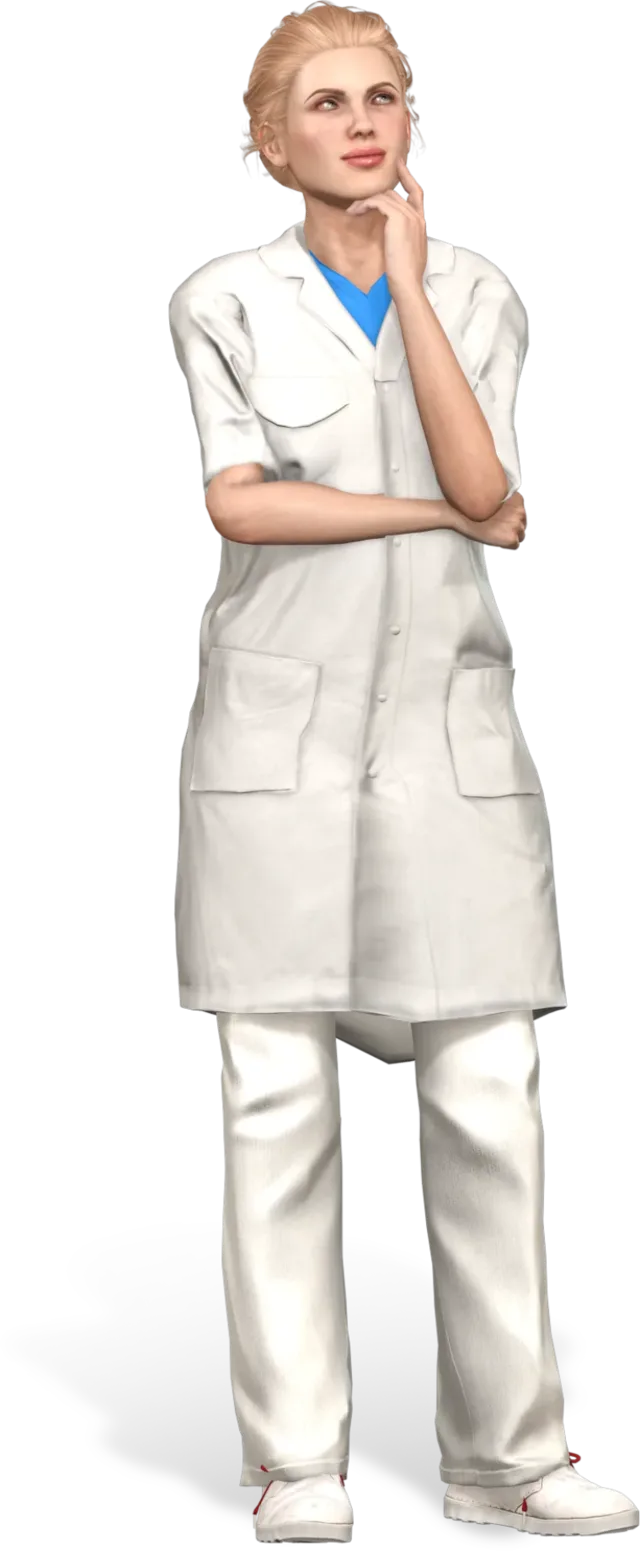
3D character: physician thinking it over